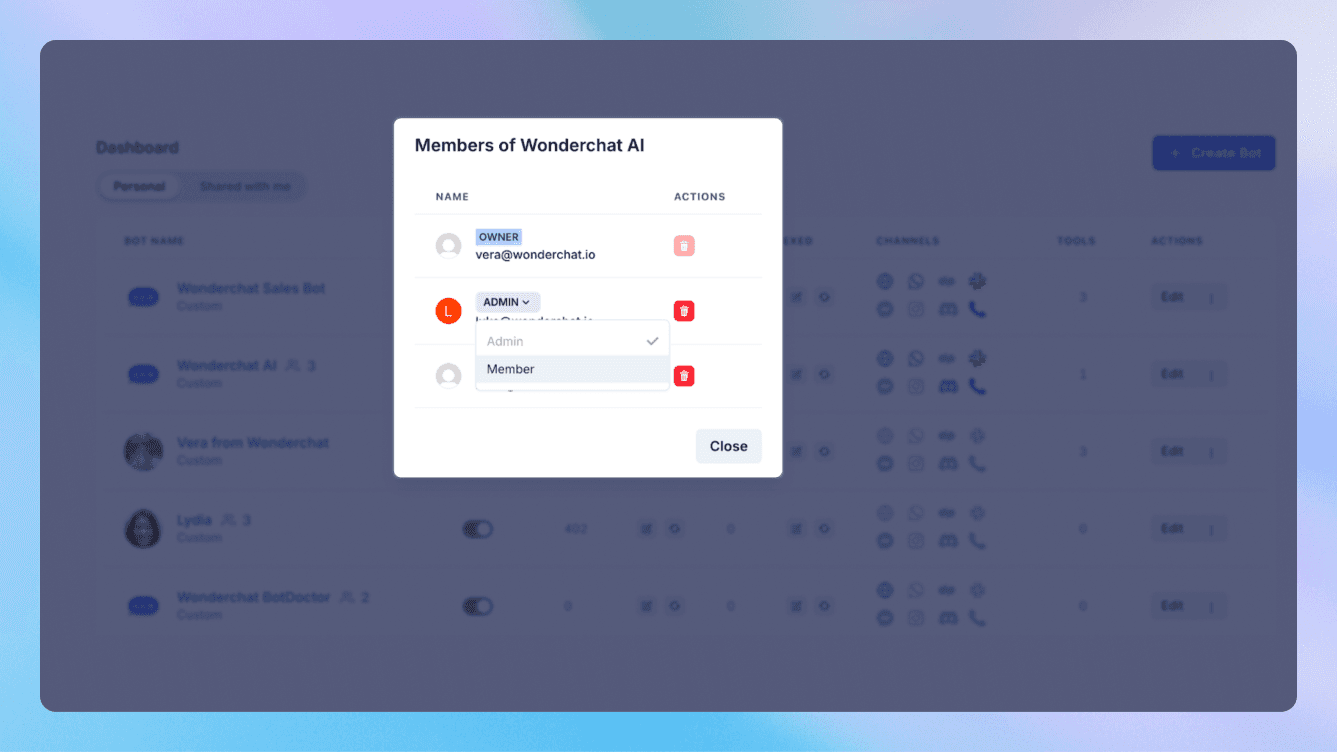
Not everyone who touches your agent should be able to publish it. The person writing content, the person approving it, and the person who ships it are often different people - and giving them all the same access is how a wrong answer goes live by accident. Wonderchat gives you role-based permissions to keep those responsibilities separate.
Assign roles per agent, so each person gets exactly the access their job needs and nothing more: some can view and analyse, some can edit content and flows, some can publish changes to production. The people drafting answers can't accidentally push them live; the people reviewing can see everything without being able to break it. It's the difference between a tool one person owns and a platform a team can safely share.
This matters most as you scale - across a support team, a marketing team, or an agency running several clients - where uncontrolled access is a real risk to both accuracy and security. Permissions give you the audit trail and the guardrails a larger operation needs.
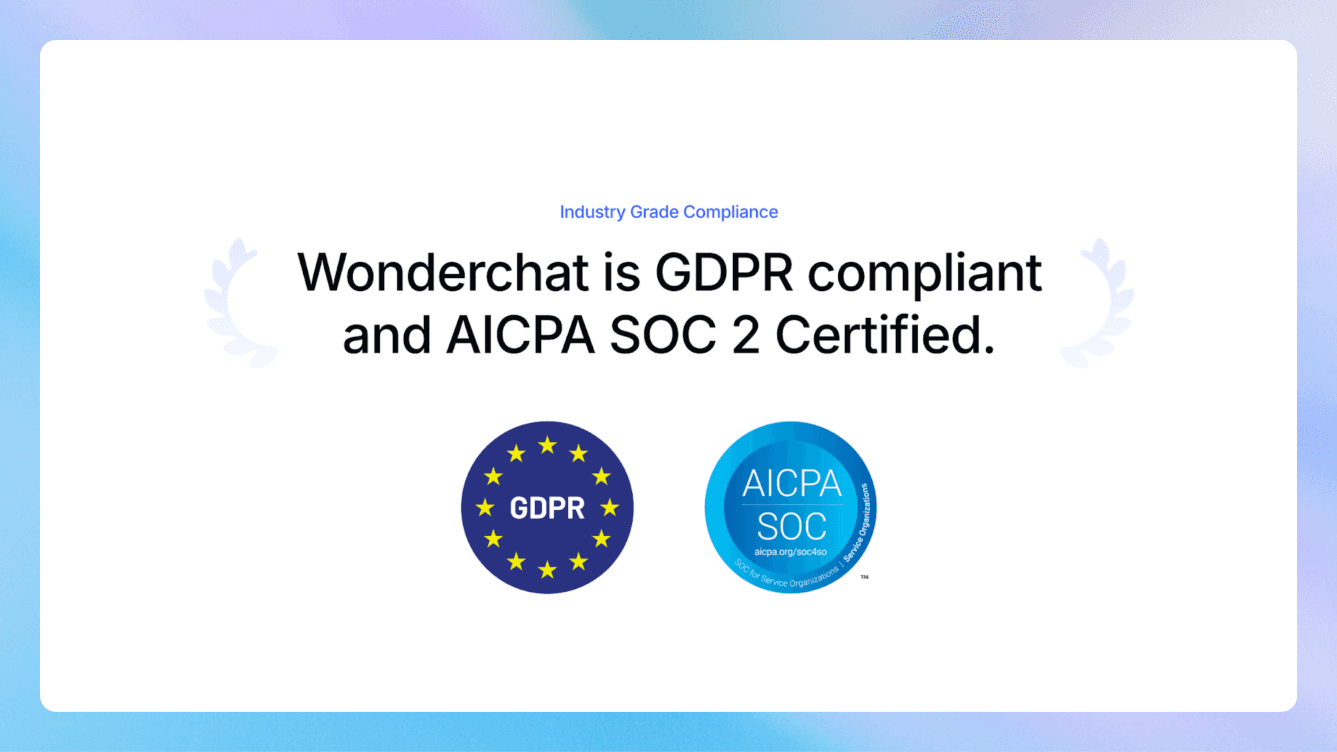
It works alongside SSO, which controls who can sign in at all, on a SOC 2 Type II certified, GDPR-compliant platform. Give your team the right access - no more, no less - and share the agent without sharing the risk.
FAQ
Can I control who can edit and publish our agent?
Yes. Role-based permissions let you assign per-agent roles - view, edit, or publish - so each person gets exactly the access their job needs.
Can I stop people from accidentally publishing changes?
Is this useful for agencies managing multiple clients?
See it answer your hardest question — from your own docs.
One agent for support and sales, trained on your content, ready in minutes.