ChatGPT has become a go-to tool for employees, creators, and businesses, but privacy concerns are growing. Employees can paste company data into ChatGPT without realizing the risks.
The real question is, how private is your data when using ChatGPT? This glossary breaks down what data is collected, when it's shared, and safer alternatives.
Is Your Data Private on ChatGPT?
The short answer is: not entirely. While OpenAI anonymizes conversations to remove direct identifiers, ChatGPT interactions may still be stored and reviewed. Some data is used for model training, meaning your prompts could help improve future versions of the AI.
ChatGPT doesn’t actively share personal details with other users or sell personal details to advertisers. However, OpenAI may use your data internally to improve the platform’s performance, enhance accuracy, or comply with legal requirements. Your data is somewhat protected through anonymization, but it’s not fully private.

If privacy is a concern, be cautious about the information you share. If you're uncomfortable with how your data is used, you can opt out of having your data used for model training via OpenAI's privacy portal. It’s also important to review OpenAI’s privacy policy to understand how your data is handled and stored.
Does ChatGPT Share Your Data With Third Parties?
ChatGPT doesn’t sell your personal data to advertisers or third parties. However, OpenAI may share some data with:
Service providers that keep the platform running.
Legal authorities, if required for compliance or investigations.
Employers, in the case of enterprise accounts with admin access.
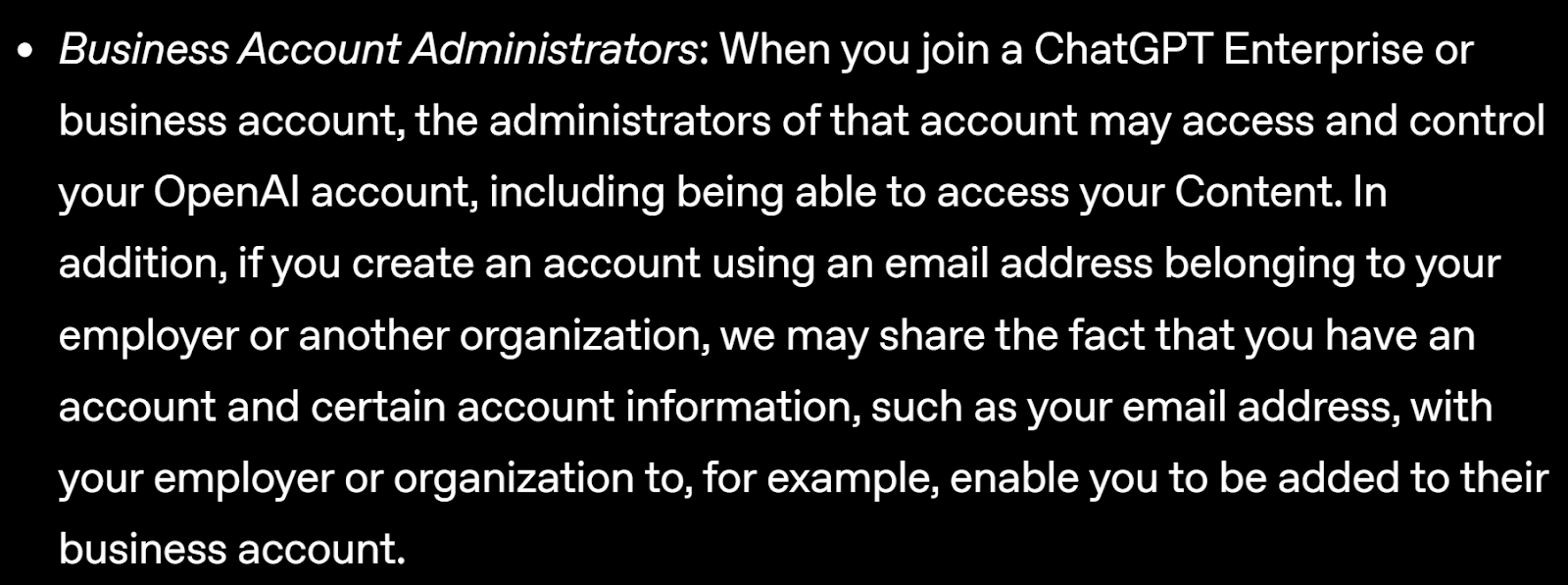
This means while your information isn’t traded for ad revenue, it may be disclosed in limited contexts for functionality, safety, or regulation.
Does ChatGPT Share Your Media Files?
ChatGPT now allows image, media files, and audio uploads. These media files are processed for analysis and may also contribute to model improvement.
OpenAI’s privacy policy states that media files you upload, like your prompts and other content, may be used to enhance AI model performance. However, it’s unclear whether these files are stored long-term or shared with third parties for service improvements or legal compliance.
If you're concerned about the use of sensitive media, it's best to avoid uploading files unless absolutely necessary. Once uploaded, control over how that data is used is limited.
What Are the Real Risks of ChatGPT Data Sharing?
Even if ChatGPT anonymizes content, there are still potential risks for businesses and individuals:
Human review: A portion of flagged conversations may be reviewed by OpenAI staff for moderation or quality control.
Accidental oversharing: Employees may paste sensitive data into prompts without realizing it persists in logs.
Third-party features: Integrations, plug-ins, or shared links can pass data outside OpenAI’s control.
These risks don’t mean ChatGPT is unsafe to use, but they highlight the need for caution when sharing anything sensitive.
Best Practices for Using ChatGPT Safely
If you want to keep using ChatGPT but reduce risk, here are a few steps:
Avoid entering confidential company or customer information.
Opt out of data being used for training through OpenAI’s privacy portal.
Use enterprise settings where possible for tighter admin control.
Treat prompts as if they could be read by someone else later.
These precautions reduce exposure but don’t guarantee complete privacy.
How Wonderchat Handles Your Data
Wonderchat is built for businesses where data privacy and security aren't optional. Wonderchat is built to keep your data under your control, with:
Security: SOC 2 Type II, GDPR, EU-hosted in Frankfurt, HIPAA BAA available.
No-code setup: Wonderchat lets businesses create an AI agent without code, making it easy to deploy without compromising privacy.
AI model training opt out selection: Wonderchat prevents customer data from being used for AI model training.

You can train your AI agent using a variety of sources, like websites and PDFs, while ensuring that your data is securely managed. This provides a more controlled, privacy-conscious environment for businesses, especially those handling sensitive customer information.

Data ownership and control: Wonderchat shares your information only with service providers who help run the business, confirming that they comply with GDPR standards. You retain full ownership of all data, offering greater control and peace of mind.
What Data Does Wonderchat Collect?
Wonderchat collects this data only with user consent, to provide the service and improve the user experience. This includes:
Electronic Identification Data: Includes IP address, device and browser data, and location data.
Website Usage Data: Tracks how visitors arrive at the website and the pages they visit.
Registration Information: When you create an account, Wonderchat collects your first and last name, username, and email address.
Billing Information: For paid services, billing details, name, address, and payment information are collected (processed by payment service provider, Paddle).
AI Agent Data: Includes data like knowledge base, file data, chat logs, and analytics, stored and managed for your use.
3rd Party Integrated Data: If you connect to third-party services (e.g., HubSpot, Google Drive, Zendesk), data may be shared with those services.
Wonderchat doesn’t sell data or use it for marketing, and third-party APIs are not used for AI or ML training.
Case Study: Ricardo.ch
Ricardo.ch, Switzerland’s largest online marketplace, integrated Wonderchat’s AI assistant into its help center. This multilingual agent was trained on Ricardo's internal help documentation.
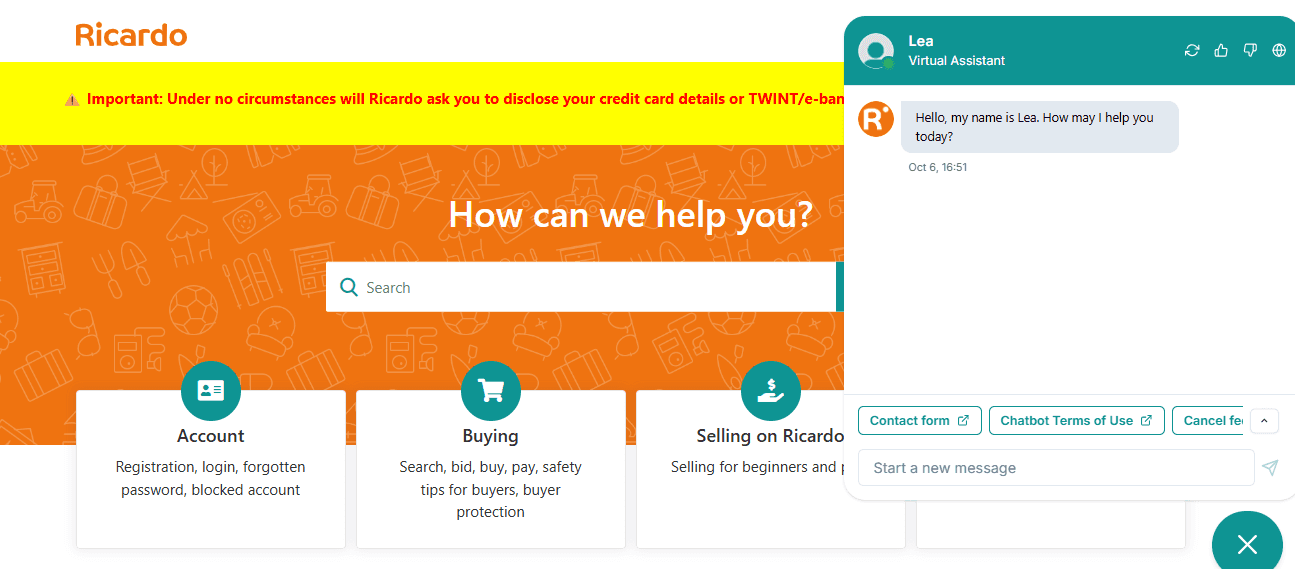
This case study shows how Wonderchat can enhance customer support while prioritizing data privacy, making it a compelling alternative to platforms like ChatGPT. Most importantly, Ricardo retained full control of its data, ensuring customer trust and compliance with strict European privacy regulations.
Wrapping It Up
So, does ChatGPT share your data? It doesn’t sell it, but it does store, review, and sometimes share it for operational or legal reasons. For casual use, this may be acceptable, but for businesses handling sensitive customer information, it creates unnecessary risks.
That’s where Wonderchat comes in. Wonderchat is SOC 2 Type II, GDPR, EU-hosted in Frankfurt, with a HIPAA BAA available, and it answers only from your own content.
In short, if data security is a top concern, a customer service agent that answers only from your own content, like Wonderchat, fits better than a general-purpose assistant.