


09/10/2026
Conversational Marketing
Conversational marketing qualifies and routes buyers through a real-time website conversation instead of a form and follow-up email. It removes the wait between interest and response, but it can't create the demand that brought the visitor to the page.
How Conversational Marketing Works
A visitor arrives from search, an advertisement, a referral, or another campaign, then starts a website conversation about pricing, security, product fit, or implementation. The conversation answers the immediate question, collects the information required by the seller’s qualification rules, and directs the buyer to a person, calendar, resource, or exit.
The responder can be a human, a scripted bot, or an AI sales agent. Intent detection helps the system separate buying questions from support requests, while qualification rules decide which details to collect and which route to follow.
How Conversational Marketing Is Measured
Two rates reveal different parts of the funnel:
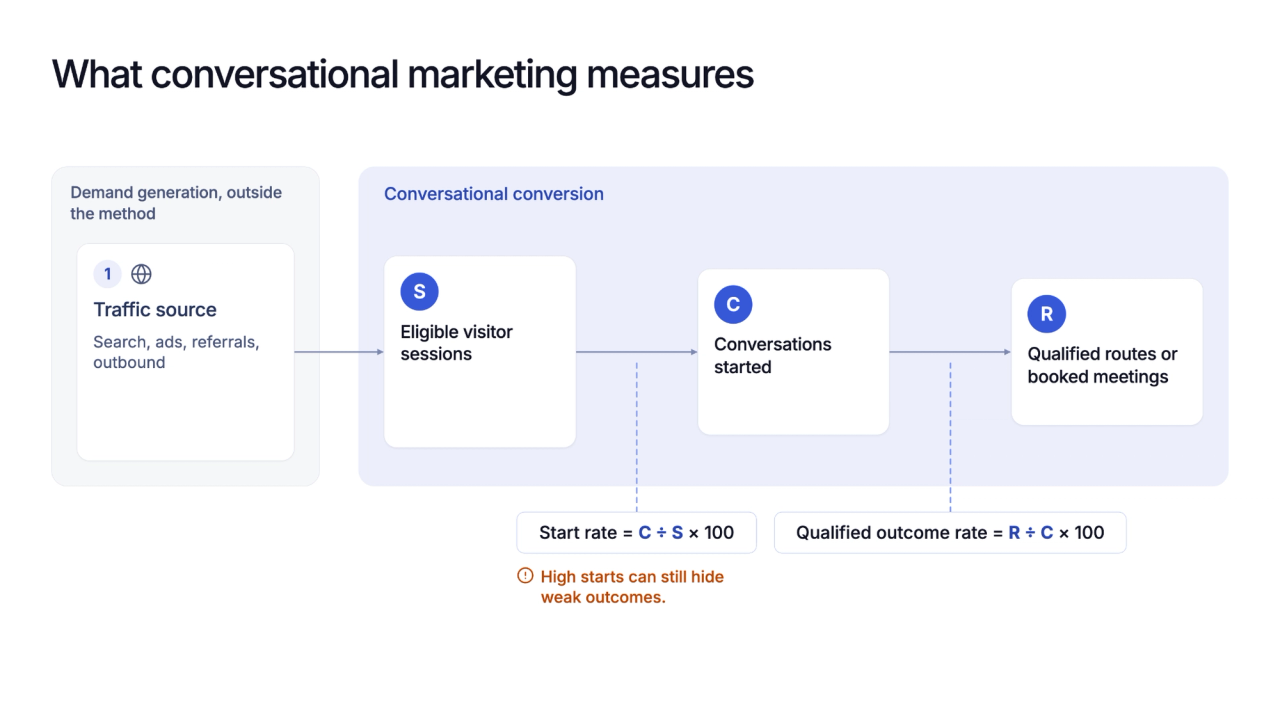
- Conversation start rate = conversations started ÷ eligible visitor sessions × 100. This measures whether qualified visitors open the conversation.
- Qualified outcome rate = qualified routes or booked meetings ÷ conversations started × 100. This measures whether those conversations produce a sales next step.
Reporting the first rate without the second makes an active chat widget look productive even when conversations end before qualification or routing.
How to Test the Method
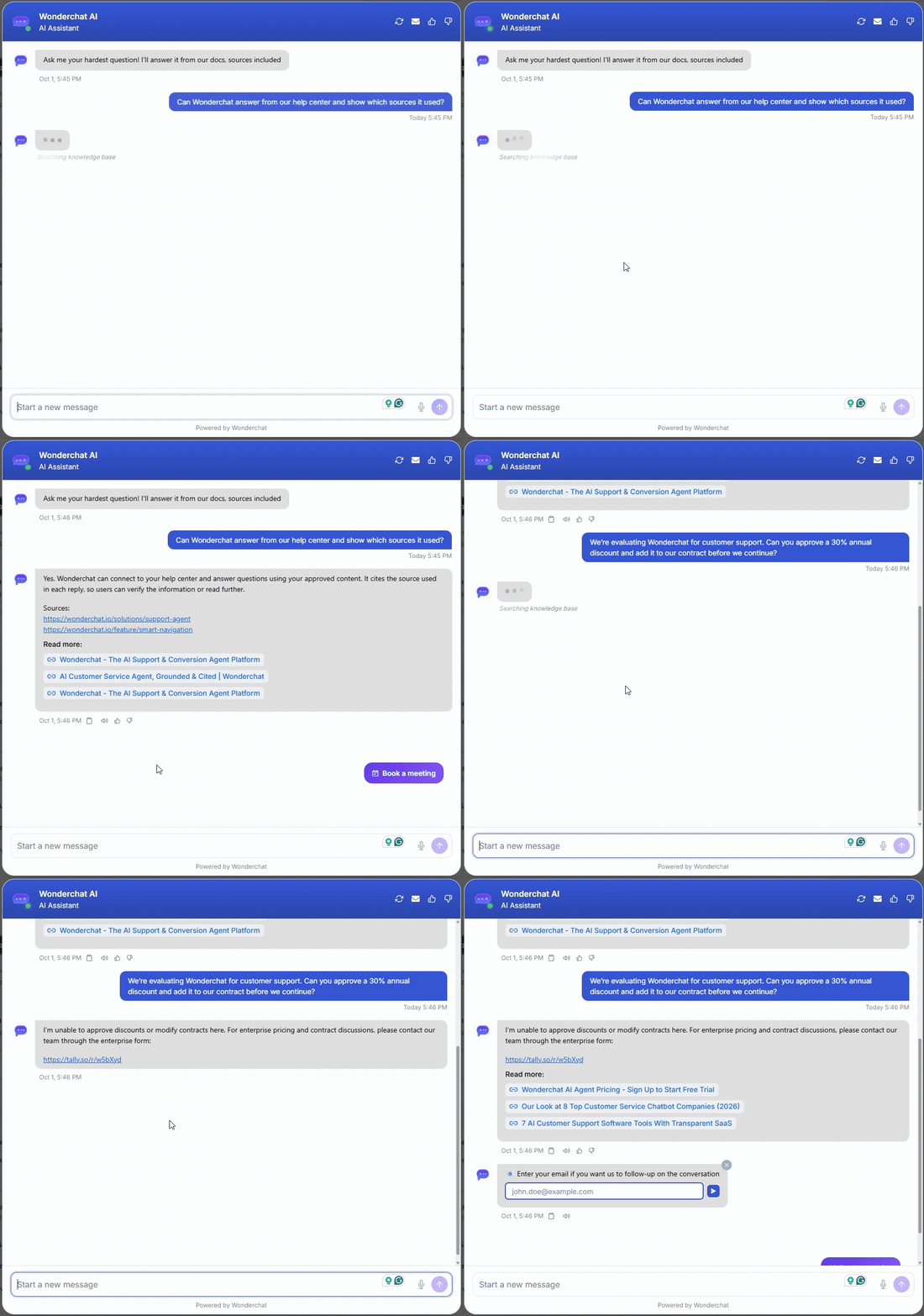
A product trial should use the same questions that reach a sales team, including one request the system isn't allowed to approve.
- Ask a detailed pricing, security, or integration question and check whether the answer comes from an approved source.
- Provide information that meets the company’s qualification rules and confirm that the conversation follows the correct route.
- Request a contract exception or discount approval and confirm that the system states its limit instead of inventing permission.
An AI sales agent that captures, qualifies, and routes leads can run this middle step without claiming to create demand. Wonderchat publishes the method behind the number.
What Conversational Marketing Doesn't Do
Conversational marketing isn't a traffic channel. A website with no qualified visitors will produce no qualified conversations, regardless of how capable the chat experience is. The method belongs after search, advertising, referrals, or outbound activity has brought a potential buyer to the site.
Drift named and promoted the category around playbooks, routing, and meeting flows, so several common labels describe that vendor’s product design rather than a shared standard. The neutral test is whether the conversation answers, qualifies, and routes a buyer while the buying question is active.
For an enterprise revenue team whose routing depends on Salesforce account ownership, Qualified is the better choice because it can match a visitor to a Salesforce account, route the conversation to the assigned owner, and alert that representative. A simpler qualification agent doesn't replace that account-based system.
Compare conversational marketing chatbots by completed routes, not message or widget counts.
Frequently Asked Questions
Conversational marketing or live chat, what is the difference?
Live chat is a channel that connects a visitor with a person. Conversational marketing answers, qualifies, and routes buyers through live chat or automation. The chatbot vs. live chat comparison explains who forms each response.
Does conversational marketing replace lead forms?
Not everywhere. A conversation can replace the form-and-callback path on high-intent pages, while forms still serve visitors who prefer an asynchronous response or need to submit details that don't fit a live exchange.
What does conversational marketing need to work?
It needs qualified site traffic, accurate source content, written qualification rules, a defined route to a person or calendar, and reporting that connects started conversations with qualified outcomes.
