


16/10/2026
Customer Service Automation
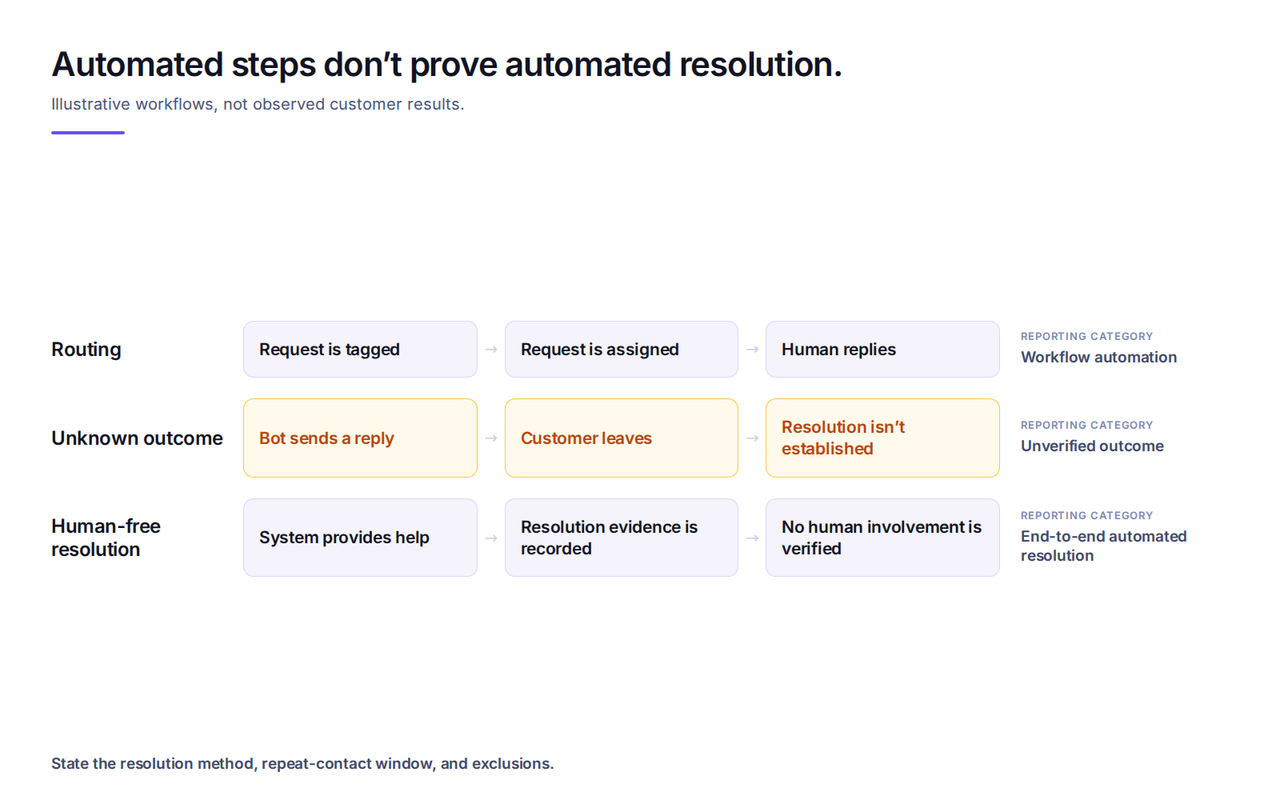
Customer service automation uses software to perform support tasks without someone doing each step manually. Routing and tagging automate workflow; resolving a request without human help is a separate outcome that needs its own measure.
How Customer Service Automation Works
IBM's definition includes routine support tasks, not only answering questions. A rule can recognize an incoming billing request, assign it to the billing team, and send an acknowledgment while the actual problem remains open.
An answering system can retrieve documentation or run an allowed workflow, but the outcome needs a separate check. Sending password-recovery instructions can help a customer regain access; sending the same instructions to someone without access to their recovery email leaves an exception unresolved.
For teams whose bottleneck is rule-based assignment or ticket-field updates, Jira's automation actions fit that job better than an answer-only agent. Routing remains useful automation even when staff still need to resolve the request.
Workflow Automation Isn't Automated Resolution
An automation total can combine tags added, replies suggested, and conversations completed without staff. Those events describe different amounts of work, so adding them together doesn't show how many customer problems the system solves independently.
A human-selected canned response still requires a person, as does an AI draft that needs approval. Deflection rate concerns contacts kept away from a human queue; it doesn't establish that those customers get a working answer.
How to Measure End-to-End Customer Service Automation
Automated resolution rate = conversations resolved without human involvement ÷ all in-scope conversations × 100.
The report needs a stated method for identifying resolution, a reporting period, and a window for checking repeat contact about the same issue. It also needs to name and count exclusions, and explain how abandoned conversations, unclear outcomes, and escalations enter the denominator.
No human message isn't enough: a person can approve an action without sending a reply, and a customer can leave without receiving help. Transcript and action records need to support the claim, while customer confirmation, verified task completion, or a disclosed evaluation method provides resolution evidence.
How a Small Team Tests Customer Service Automation
A team evaluating AI customer support can start with recurring questions that current documentation answers, while keeping exceptions with staff. The initial test set needs to include:
- A question with a current, documented answer.
- A question the connected documentation doesn't cover.
- A familiar request with an exception that changes the answer.
Wonderchat publishes the method behind the number. Its support and QA observations identify a recurring failure: retrieval selects an archived policy and answers from it correctly. Checking an AI support agent that shows its sources therefore requires checking whether the cited policy still applies.
Buyers comparing customer support automation tools need to review wrong answers, repeat contacts, and human involvement alongside completed requests. Automating more conversations isn't progress if customers return for the same unsolved problem.
Frequently Asked Questions About Customer Service Automation
Is a chatbot the same as customer service automation?
A chatbot is a conversational interface or system. Customer service automation also includes routing, notifications, and other workflows. A chatbot can answer, collect details, or hand a request to staff; its presence doesn't prove that requests are resolved without human help.
What can realistically be automated?
Routing, acknowledgments, status notifications, and documented questions are candidates. Account-specific actions require the relevant access, permissions, and safeguards. Requests involving missing information, policy exceptions, or approval requirements need clarification or human review rather than an assumed automatic resolution.
Does automation lower CSAT?
Automation doesn't determine CSAT by itself. Wrong answers and blocked access to staff can damage the experience, while timely, useful help can improve it. Comparisons need matching request types, survey triggers, rating scales, and response rates, with resolution checked separately.
