


13/11/2026
Pipeline Generation
Pipeline generation is creating new qualified sales opportunities, deals a sales team accepts and tracks with a value in its CRM. Inbound pipeline generation does it with buyers who come to you, such as website visitors and demo requests.
Where does interest leak before it becomes pipeline?
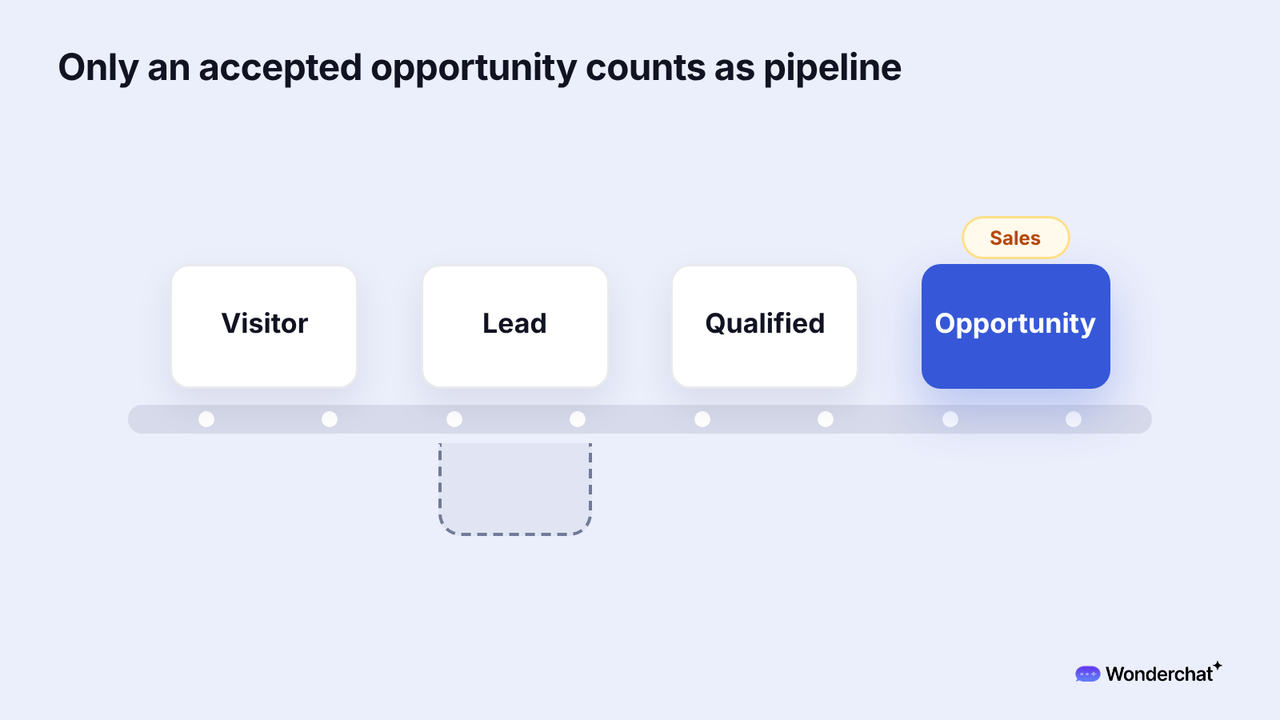
Interest becomes pipeline in four stages, and each one can leak:
- Visitor: a buyer visits the pricing page, fills a form, or opens a chat
- Lead: the buyer leaves contact details or a question, and a teammate or an AI agent answers it
- Qualified: the buyer answers the team's qualifying questions, with BANT (budget, authority, need, timing) as one checklist sales teams use, and agrees a next step such as a meeting
- Opportunity: sales accepts the deal and tracks it with a value
Outbound starts the same chain from a list and writes first. Inbound starts from the buyer's own question, so the first answer is the first step, the part conversational marketing covers.
Wonderchat's AI sales agent answers buying questions from a company's own pages, asks the qualifying questions the team sets, shares the team's booking link, and routes the lead to the right person or CRM.
How do you measure pipeline generation?
Two formulas cover it:
Pipeline generated = total value of new qualified opportunities created in a period, by source
Lead-to-opportunity rate = new opportunities ÷ new leads in the same period
Inbound teams add two more, the median time from a lead's first message to the first reply and the share of buying questions answered on the first visit. Both show where inbound pipeline leaks.
- Counts: opportunities sales has accepted, each one once, on the day it was created
- Doesn't count: a booked meeting sales hasn't accepted, or a deal reopened next quarter
For example, 400 inbound leads in a month turn into 32 accepted opportunities at an average of $6,000. The month generated $192,000 of pipeline and an 8% lead-to-opportunity rate.
Why does a founder track pipeline over leads?
A forecast runs on pipeline. A month of strong lead numbers and few new opportunities points at the handoff between marketing and sales.
In Wonderchat's study of 5,848,078 conversations between March 2023 and August 2026, conversations from people deciding whether to buy were 23% of all conversations, based on 5,000 scored conversations classified by stage.
If a visitor with a buying question waits hours for an answer, more traffic buys more waiting. A teammate or an agent on the website that answers while the buyer is still there closes that gap.
Is pipeline generation just lead generation with a longer horizon?
Qualified's guide separates the two by time, with lead generation as short-term conversions such as form fills and pipeline generation as longer-term work. The line that holds is qualification and an agreed next step. A lead is a contact, and pipeline is an opportunity sales has accepted.
For inbound, leads stall between the two while a buyer's question waits for a reply. Wonderchat answers from a team's own help center and shows the source on every reply.
Generating pipeline also differs from managing it. Stages, forecasts, and coverage come after an opportunity exists, and Qualified's definition folds both into one process.
Frequently asked questions
What does pipeline generation mean?
Pipeline generation means turning buyer interest into opportunities a sales team can forecast. Teams count it as deal value created per month or quarter, by source.
How do you generate a pipeline?
For inbound, answer buying questions while the buyer is on the site, ask the team's qualifying questions, agree a next step such as a meeting, and hand the lead to sales with the conversation attached.
What is PipeGen?
PipeGen is short for pipeline generation. It names the same work, creating new qualified opportunities for sales to accept and track.
